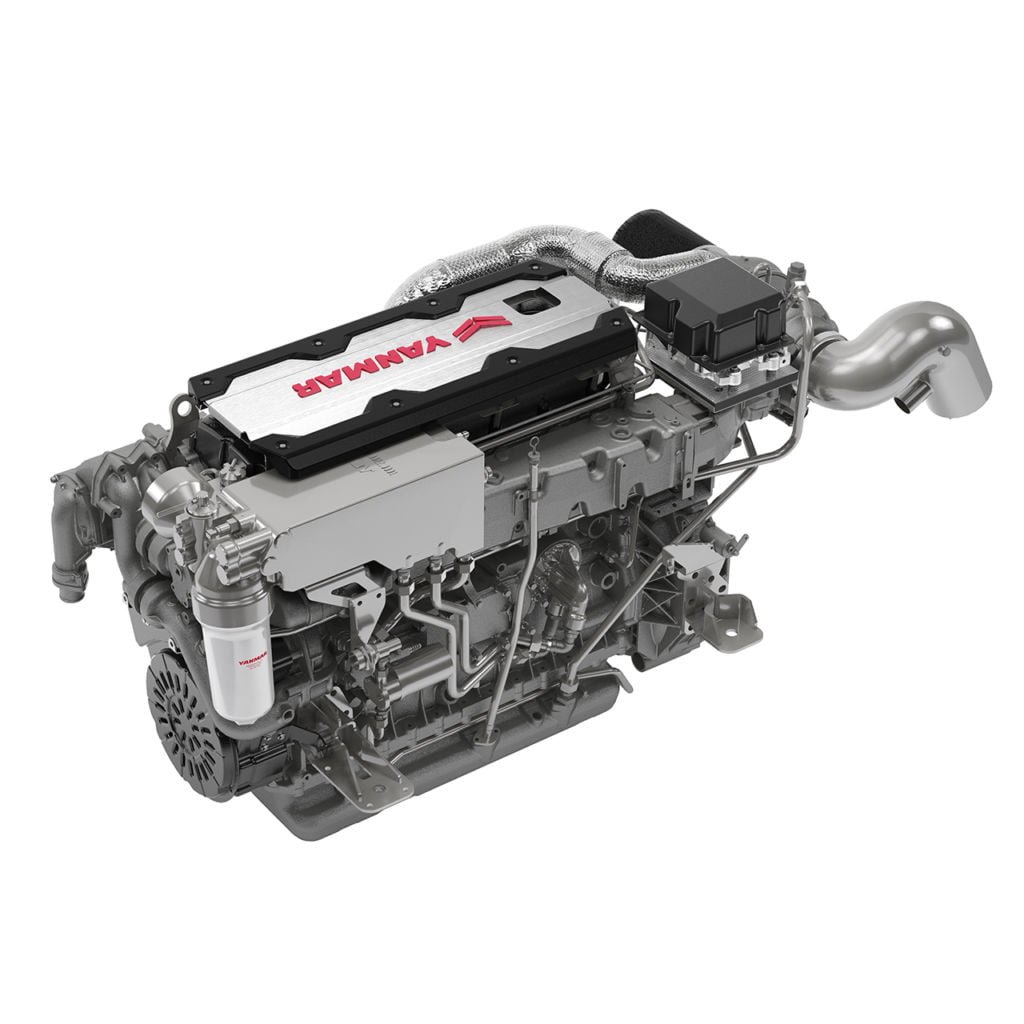
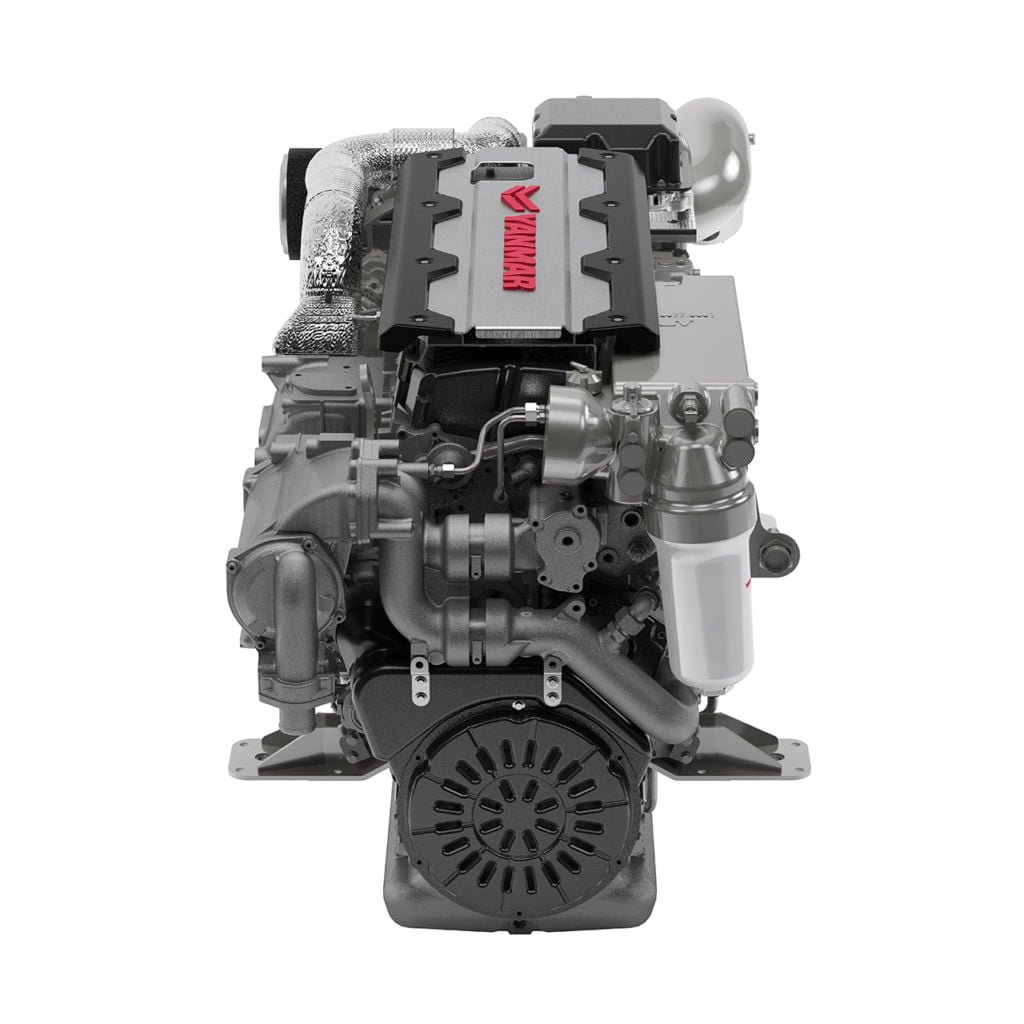
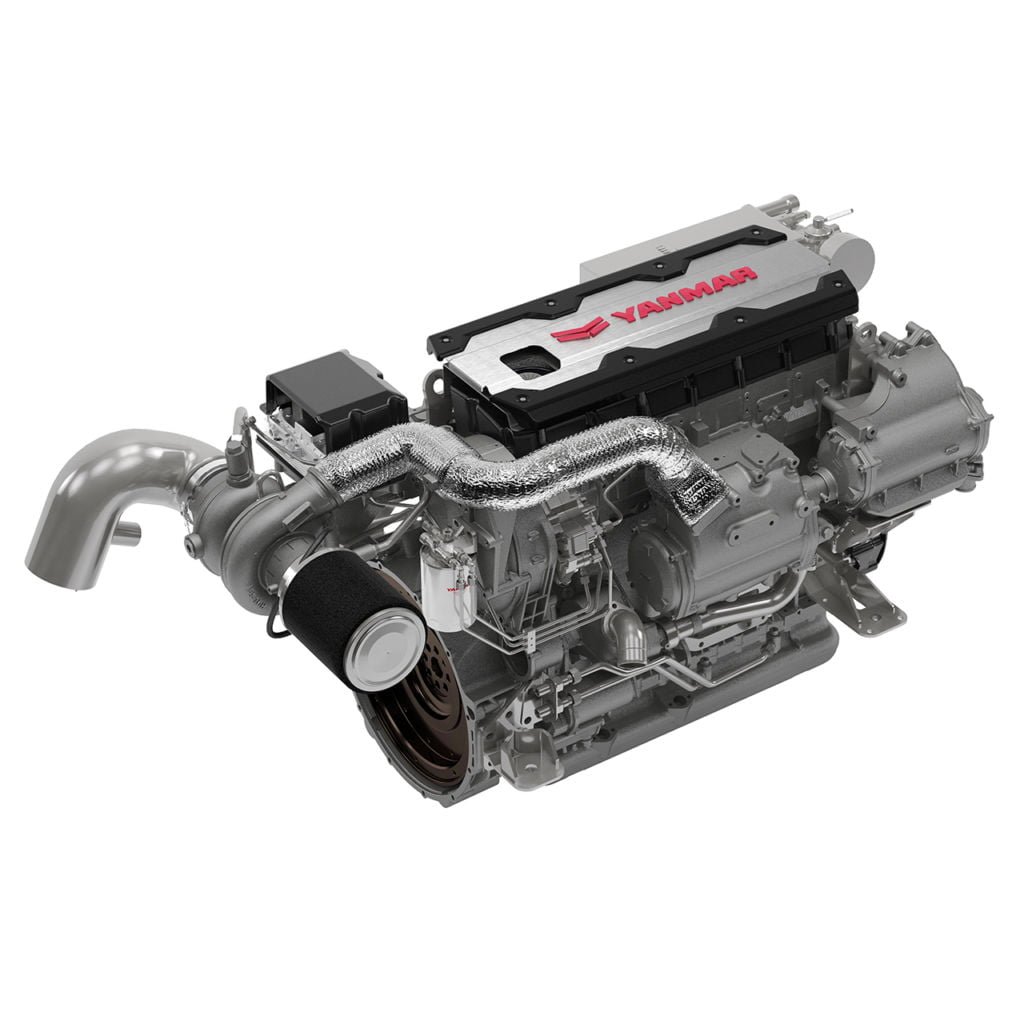
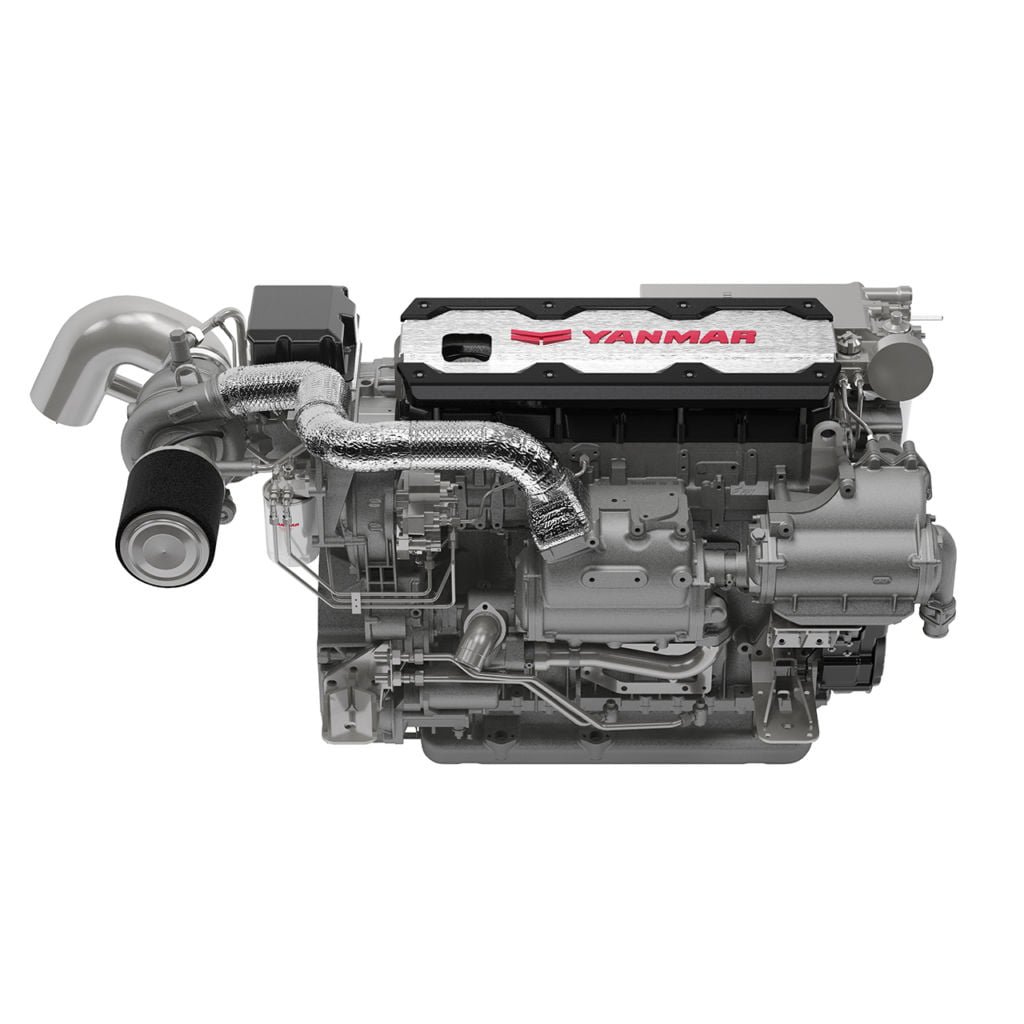
Fast planing boats need an engine that can deliver substantial power without creating an unnecessarily bulky propulsion package. The Yanmar 6LT Series addresses this requirement with an inline six-cylinder design intended for recreational motor yachts, fast boats and light-duty commercial vessels using inboard propulsion. Its 8.7-litre displacement and compact installation profile also make it a strong candidate for higher-horsepower repower projects.
Three output choices allow the 6LT platform to serve different performance requirements. The Yanmar 6LT500 produces 500 MHP (367 kW), the Yanmar 6LT580 increases output to 580 MHP (426 kW), and the Yanmar 6LT640 delivers 640 MHP (470 kW). Each engine reaches its rated output at 2,530 rpm, making it easier to compare the models by required power rather than by different operating speeds.
Power delivery is managed through a Bosch common-rail fuel system combined with turbocharging and intercooling. Electronic operation through the Yanmar VC20 or VC30 Vessel Control System supports CAN-bus controls, multifunction displays and additional helm stations. Standard specifications also include a 24-volt electrical system, 90-amp alternator, high-riser mixing elbow, mounting brackets and freshwater expansion tank, subject to the final package configuration.
Installation planning should establish far more than whether the Yanmar 6LT marine engine fits inside the compartment. ZF angled, parallel-offset and V-drive gearbox arrangements may be available, but the correct transmission and reduction ratio depend on the shaft line, hull performance and propeller calculation. Buyers should also evaluate exhaust height, ventilation, cooling-water flow, service clearances, engine-bed loading and the access route into the machinery space.
Before purchasing a Yanmar 6LT engine for sale, request written confirmation of the exact model, condition, rated output, emissions certification and propulsion configuration. The commercial offer should distinguish the standard engine package from optional equipment such as flexible mounts, two-pole electrics, secondary alternators, NMEA 2000 monitoring, extra control stations and joystick control. Warranty coverage, commissioning requirements, production lead time, export packing and freight terms should also be agreed before shipment.